There’s a particular kind of anxiety that settles over a school when a big change is announced but the detail hasn’t arrived yet.
You know something significant is coming. You know it will affect your curriculum, your staff, and your students. And you’re being asked to lead through it without the full picture.
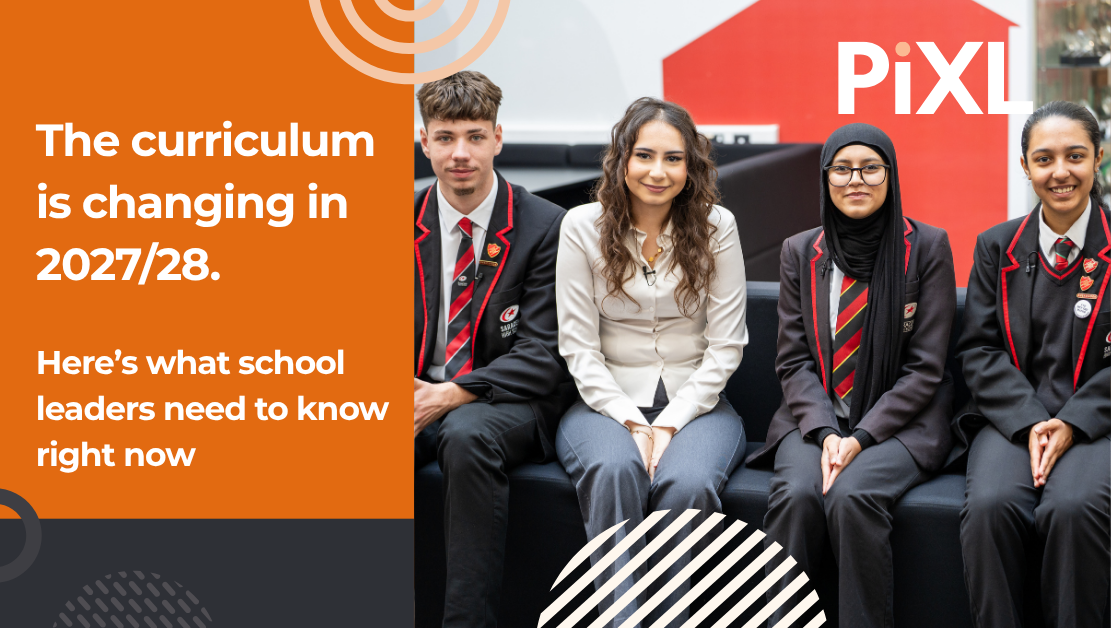
That’s where many school leaders find themselves right now. The national curriculum is being published in Spring 2027 and will be taught from September 2028. The direction of travel is clear. The granular guidance is still taking shape. And somewhere between those two facts, there’s a lot of noise, a fair amount of anxiety, and not quite enough signal.
This post won’t give you false reassurance. What it will give you is a clear look at what we know, what we don’t, and what’s worth doing right now.
What we know
The government has confirmed that a revised national curriculum will come into effect from September 2028. This is a whole-curriculum reform. The DfE has said some subjects may be subjected to small changes, whereas others maybe larger. Every key stage from KS1 to KS5 is in scope.
The areas that have received the most attention in early guidance include a stronger emphasis on knowledge sequencing and curriculum coherence, a more prominent role for literacy and oracy across all subjects.
None of that is revolutionary if you’ve been paying attention to the direction of curriculum thinking over the last decade. But the formalisation of it matters.
What we do not know
The full subject-by-subject programmes of study haven’t yet been published. Assessment implications are still being worked through. Schools won’t have complete clarity on every element of what’s required before they need to start planning for it.
Living with that ambiguity is hard. It’s also where schools that do the groundwork now will pull ahead of those that wait, because the best preparation for a curriculum change isn’t sitting with the final document when it arrives. It’s knowing your current curriculum well enough to respond to it quickly and confidently.
What to do right now
The most useful thing you can do at this stage is look honestly at what you already have.
That means audit work and subject leader conversations. A clear-eyed view of where your curriculum is genuinely strong and where the gaps are. Schools that do this now arrive at the new guidance with something to interrogate it against. Schools that skip this step will find themselves reacting to a document rather than leading a process.
Your subject leads need attention before the detail lands, not after it.
Curriculum reform lands on subject leaders. They will be the ones mapping new expectations to department practice, leading their teams through whatever changes follow, and fielding questions they may not yet have answers to. If they feel unsupported or uncertain right now, a single briefing won’t fix that. What they need is structured professional development that builds genuine subject confidence, not just an awareness of what’s coming.
Hold on to what good curriculum leadership has always looked like.
Coherent sequencing, subject expertise, attention to literacy and oracy across the school: these things mattered before this reform, and they will matter under it. School leaders who stay anchored in those fundamentals are better placed to lead change without losing what’s distinctive about their school’s curriculum. The temptation in a reform cycle is to treat everything as up for grabs. It rarely is.
The breathing space you might not know you have
There’s something worth pointing out: your school almost certainly has more to build on than the current anxiety suggests.
The changes coming in 2027/28 aren’t a signal that what you’ve built is wrong. For most schools, the work ahead is about adaptation and formalising practice that’s already happening, not starting again. Being clear on this and being able to articulate it to your staff and governors, is part of what steady curriculum leadership looks like right now.
Schools that go into a curriculum change with a clear sense of their own strengths don’t just survive it. They use it. Confidence in what you’ve built is the starting point for everything that comes next.
How PiXL is supporting schools through this
The Curriculum Leadership Programme 2026/27 was built because schools need more than a briefing on what’s changing. They need the space and structure to get genuinely ready.
The programme runs from October 2026 to March 2027, online, in five sessions of 1.5 hours each. Dr Alex Fairlamb will lead the program, supported by Professor Mick Waters, alongside PiXL’s subject lead specialists, and it’s structured separately for school leaders and subject leads because the challenge looks different depending on where you sit.
School leaders work on the leadership framework: understanding the reform and building the conditions for their subject leads to do their best work. Subject leads get deep curriculum knowledge, a grounding in literacy and oracy specific to their subject area, and a peer community of subject leads doing the same work at the same time.
It’s free for PiXL member schools. If you want to know more, speak to your PiXL Specialist or get in touch directly.
The curriculum is changing. The schools that will handle it best are the ones that already know what they are. That work starts now. Find out more here.