Author: MRS Digital

  • #1MillionStories

    #1MillionStories

    When it comes to reading, working-class boys and young men are the group we’re losing fastest. Their enjoyment, confidence and attainment continue to fall, and the gap keeps widening. Just one in four boys aged 8–18 say they enjoy reading in their free time, compared with almost 40% of girls. For those eligible for free school meals, the picture is bleaker still.

    These patterns don’t appear at secondary school. They take root in primary and compound over time, shaping how children see themselves, whether they feel they belong and the opportunities that can either open up or quietly narrow as a result.

    This half term, we’ve celebrated World Book Day, and with it, the launch of #1millionstories by Boys’ Impact, a campaign named for the one million boys eligible for free school meals in schools across England, to amplify and platform the voices and stories of young working-class boys in our schools. Whilst World Book Day might have passed, the opportunity to champion the voices of boys is year-round.

    1 Million Stories - Boys' Impact

    What #1MillionStories asked us to do

    The campaign’s invitation was beautifully simple: create space to listen. Not to assess, not to intervene, just to hear what boys genuinely have to say about reading.

    What does it mean to them?

    When do they feel seen in a book and when don’t they?

    What gets in the way?

    What would make it better?

    These are not assessment questions. They are the kind that change the way we see the children in front of us.

    Starting with what we already know

    In every primary school, there are boys who can read but choose not to. They have quietly decided that reading is not for them and they may not be the ones who appear on our intervention lists. In fact, they can be the pupils who pass every benchmark yet never pick up a book by choice. Most of the time, we already know exactly who they are.

    What we might not know is what they think. Not about phonics or comprehension but about reading itself: what it feels like, what it means, whether it has anything to do with who they are or who they want to become.

    That’s where the real conversation starts and spreads far beyond their connection with just books. 

    If #1MillionStories has opened a door, these are some of the questions that might help you walk through it:

    These questions are likely to open conversations worth exploring together as a staff. They matter particularly in primary, where the foundations of reading identity are formed.

    Of course, the question that underpins all of these is: where are we getting our answers? If we’re answering these questions for boys rather than putting their voices central to the discussion, we risk building reading provision on assumptions rather than true understanding. The most powerful thing we can do as schools is ask and be willing to hear the answers.


    Across education, we’re used to discussing the systemic gaps in achievement between boys and girls. The power of the invitation from Boys’ Impact is simple but important: it asks us to think not about “boys” as a group, but about the individual children we are privileged to teach and their perspectives on reading, which are not always visible in the data we gather. When we make space for their voices, we don’t just learn what books to put on our shelves, we learn where the barriers actually sit and they’re not always where we expect.

    So, while World Book Day has passed, the invitation hasn’t.

    One conversation with one boy about what reading means to him could shift something, for him and for your school community. If enough of us do that, across enough schools, we might just create #1millionreaders.

    Find out more about Boys’ Impact and the #1MillionStories campaign here.

    Nicola Masfield

    Leads primary reading at PiXL, supporting schools across the country to strengthen reading culture, attainment, vocabulary and oracy in primary classrooms. She has also contributed to research exploring children’s reading habits.


  • Making the Most of the PiXL Specialist and Networking Platform

    Making the Most of the PiXL Specialist and Networking Platform

    Think of it as your one-stop space to connect with people, book support and find what you need — all included in your membership. We’ve got so much on there already and upcoming upgrades are set to take you even further!

    • Book 2 places at every National Conference
    • Access your Improving Outcomes Specialist
    • Join as many expert-led surgeries and online networks as you wish
    • Enrol in the School of PiXL Leadership CPD courses (free)*
    • Book Open Days and explore our full Events calendar*
    • Get all PiXL resources in one place*
    • Give up to 6 staff full booking access — and share resources widely* 
    • Keep contact management up to date for efficient communication

    *new from July!

    We’re seeing schools use the platform in different ways, depending on their priorities:

    • Go Wide: Let teams explore, attend networks, and book surgeries as needed
    • Go Deep:Regular strategy-focused meetings with your Specialist
    • Empower Middle Leaders: Book them onto relevant support or leadership development
    • Leadership Thinking Time: Use coaching-style surgeries for personal growth
    • In-Person & Follow-Up: Use open days and conferences as launchpads for action
    • Set the Direction: Give autonomy but align bookings to your development goals

    Reflections for you and those you lead with:

    • Will you keep bookings central or share them across the team?
    • Who benefits from time with a Specialist or expert right now?
    • How will you link this to your school’s Wildly Important Goal?
    • How will you introduce this to your wider team?
  • PiXL Insights

    PiXL Insights

    Being part of PiXL means being connected to a powerful network of schools, colleges and educationalist leaders who share a common goal: improving life chances and outcomes for young people by working to close national achievement gaps. One of the ways we harness this collective expertise is through PiXL Insights – a series of publications that capture and share effective practice from across the PiXL network and beyond.

    PiXL Insights focuses on four key cohorts to break barriers:

    More Able Learners

    More Able Learners

    Learners with SEND

    Learners with SEND

    Learners from disadvantaged backgrounds

     Learners from disadvantaged backgrounds

    Parentkind: partnering with parents for impact.

    This special edition of PiXL Insights, partner with parents for impact, was created in collaboration with Parentkind and published in June 2025.

    You can download and read the full publication below.

    More information on Parentkind is available: click here

    Each year, we work in partnership with school leaders to design and deliver small-scale, bespoke projects tailored to the needs of learners in their unique contexts. Throughout the process, we provide support and space for colleagues to trial, adapt and evaluate new approaches. The outcomes – grounded in professional practice – are then published for the benefit of the whole network and the future of education at large.

    Delve in to this formidable arsenal of tools built by teachers, for teachers to inform and inspire any educator who wants to see all learners thrive.
    During academic year 2025-26, we will be working with schools, colleges and alternative provisions on projects to raise the achievement of boys and empower learners from disadvantaged backgrounds. 

    For enquiries, please email insights@pixl.org.uk or, if you are a PiXL member, book an ‘Insights‘ Surgery via the PiXL Portal

  • Adolescence, Masculinity and the Ongoing Conversation

    Adolescence, Masculinity and the Ongoing Conversation

    The recent release of Adolescence on Netflix, alongside Gareth Southgate’s Dimbleby Lecture, has sparked a welcome surge in thoughtful and productive conversations around masculinity. It’s encouraging to see these topics gaining traction, and at PiXL, this is a conversation we’ve been engaging with for some time.

    Adolescence is now available to stream for free with Into Film+ for all secondary schools in England and you may already be consideringhow you might make use of this content with your Year 10 and Year 11 students if and when appropriate. To support leaders in any stage of education looking to turn this growing awareness into meaningful action, we’re sharing a few more key resources that might help you translate discussion into impact in your context.

    A Conversation Worth Rewatching

    Back in 2023, Rachel Johnson hosted a networking live session with Mike Nicholson from Progressive Masculinity, exploring how schools can approach this topic with intention and care. While the full session is available to PiXL members, we’ve made a short, powerful segment available for everyone to watch:

    Train the Trainer

    Progressive Masculinity are offering PiXL members a discount on their ‘train the trainer’ event which enables educators to support boys and young men to critically engage with issues related to masculinities in the classroom and beyond. Find out more about this on PiXL Save.

    Insights in Print

    If you prefer reading to watching, we’ve condensed some of the most relevant content from our recent PiXL Insights publication on raising boys’ achievement (sponsored by Educake). These selected articles speak directly to the questions being raised in the wake of Adolescence and offer a range of perspectives from thought leaders in the field. You can download this below!

    Huge thanks to our contributors:

    • Alex Blower, Boys’ Impact
    • Susan Morgan & Andy Hamilton, Ulster University
    • Di Lobbett
    • Oli McVeigh
    • Deneen Kenchington

    PiXL members can download the full publication on the website.

    Join the Next Wave of Insights

    We’ll be recruiting for our next cohort of Insights projects in the summer term. If you’re interested in getting involved or want to find out more, we’d love to hear from you: insights@pixl.org.uk

  • Our Tribute to Alex Wheatle MBE

    Our Tribute to Alex Wheatle MBE

    We were deeply saddened to hear about the passing of beloved author Alex Wheatle.

    “If I’d like to be summed up, it’s that: I make the invisible, visible.

    All of those lives – like mine, like others – who I shared it with.”

    Back in 2022, we interviewed Alex as part of our PiXL in Conversation series. Alex was committed to sharing stories that are not told enough and to shine a light on those with stories like his. He was a humble, thoughtful and generous man who, despite having had a difficult experience of the education system, was filled with admiration and esteem for the teaching profession and its power to change young people’s lives. 

    We could write more about his story, but feel it’s best that you hear him in his own words.

    Sometimes in society men are forced to feel uncomfortable if we show certain emotions

  • Free Resource: Serious About Subtraction

    Free Resource: Serious About Subtraction

    By equipping leaders, we can help them inspire and guide their teams, creating environments where both students and staff thrive.

    PiXL is dedicated to giving school leaders the knowledge and resources they need to give the best possible support to their staff and students. Our members get access to a wealth of strategies, resources and how-to guides, based on the latest evidence and school-led intelligence, as well as a range of other benefits.

    Sometimes, we are addicted to adding things to our list, our plans and our approach. Of course, adding things can be a very good thing, it is how we can improve and how we can change things. Doing more can really help but sometimes it can disguise the real problem and sometimes, it can even get in the way of our leadership and our effectiveness. It is helpful to stop and pause and ask some serious questions about our relationship with productivity and addition.

    Download a free resource that provides practical ideas to master the art of subtracting to add value.

    Serious About Subtraction

    You’ll see that there’s an option to join our mailing list. Stay in the loop with everything that we’re doing to be amongst the first to receive free resources, invitations to our National Conferences and more!

  • Leadership thinking with Rachel Johnson: Equipped to Lead

    Leadership thinking with Rachel Johnson: Equipped to Lead

    Have you ever felt like you were unequipped for the responsibilities of leadership you found yourself in?

    This is a common occurrence within the educational landscape and Rachel Johnson, CEO of PiXL, even has experiences of this too.

    She knows all too well how easy it is to get caught up in the day-to-day grind, but importantly, how much more there is to being a leader than just getting things done. 

    I was excited about the chance to lead others and move things forward in my department but there was one problem, I didn’t know how. It wasn’t pedagogical knowledge that was the challenge, nor understanding assessment or the exam system, nor planning or writing the curriculum…. It was the human part of leadership, the unspoken things that I had not been trained on.”

    Check out her recent article for some practical advice that she has sourced on her personal journey from educator to leader. 

    From mastering the art of having crucial conversations to the strategies for successful delegation, Rachel outlines the actionable insights that can transform your leadership style. She also delves into the complexities of navigating leadership’s inherent paradoxes – the delicate balance between responsibility and daring, autonomy and accountability, and trust and verification.

     If you find this helpful and want more practical advice sourced from research and made applicable to education, take a look at Rachel’s Time to Think book series:

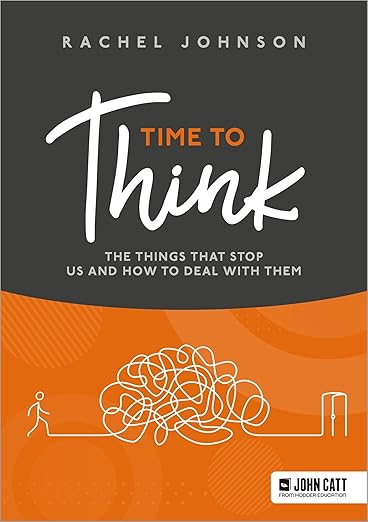
    Time to think

    This book is for those who need practical ways of tackling the tricky issues in leadership to move forward courageously. From people-pleasing to crucial conversations, this book examines the areas that can cause us to be ‘stuck’ and how we can get ourselves free.

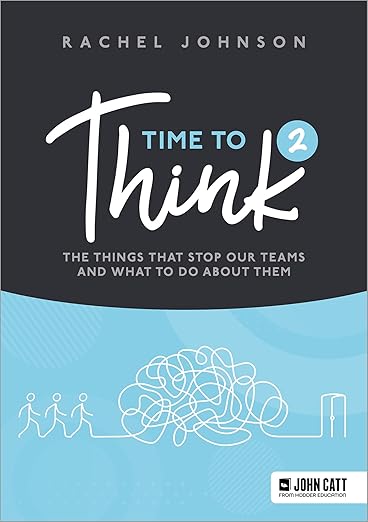
    Time to think 2

    The things that stop our teams and what to do about them

    This book is for people who want to be daring and responsible in their leadership, who want to embrace paradoxes, and understand how to create and maintain thriving teams. Use this book to help you work through the issues that are most relevant to you and your teams so that you, and they, can thrive.

    Courses available this year:

    • New Middle Leader
    • Established Middle Leader
    • Making Change Leader
    • Raising Standards Leader
    • Exceptional Senior Leader
  • Free resource: Parent-School Relationships

    Free resource: Parent-School Relationships

    PiXL is dedicated to giving school leaders the knowledge and resources they need to give the best possible support to their students.

    Our members get access to a wealth of strategies, resources and how-to guides, based on the latest evidence and school-led intelligence, as well as a range of other benefits.

    Click the link below to download a free resource looking at practical ideas around managing Parent-School Relationships so that you get the outcome you need, see the impact and engage your team. 

    Download our parent-school relationships document

    Why write this paper? 

    In recent months (and particularly post-pandemic) our members are telling us that you are finding it more difficult to work with some parents. The things we are hearing from many of you are:

    • There are more incidences of parents making demands that you feel you can’t agree to.
    • There are more angry emails, calls and unexpected visits into schools.
    • There is a feeling that some parents are backing the school less than they did.
    • The expectations of some parents seem to have increased.
    • The previous home-school contract seems to have been broken (perhaps by societal changes).
    • Facebook parent groups are a common way for parents to be communicating with each other.
    • There are societal issues that are impacting on the nature of the conversations you are having.
    • Student attendance is sometimes more difficult because sometimes parents are supporting them staying at home (or find getting them in too difficult so they don’t enforce attendance).

    A Teacher Tapp survey recently commissioned by ASCL showed that when it comes to absence of students in school, the following reasons were given by schools:

    • 87% taking holiday in term time
    • 76% had an event at home/with family
    • 66% too anxious to come in
    • 51% too tired to come in
    • 32% were kept at home because of disputes with the school

    If nearly a third of schools are stating disputes with parents as a reason for non-attendance of children, we really do find ourselves in a new and challenging situation where relationships and communication appear to be breaking down. No one wins when that is the case.

    We know that working with parents is crucially important – we are, after all, jointly working with their child as the two significant parties in their life. Schools are literally in loco parentis of their children during the school day and on trips, yet the way we work with students, and the way we work with parents too, may be totally different: there may be rules at home that are different to rules at school; a difference in aspiration, expectation and understanding about what school is. It may be that sometimes parents feel they have more aspiration for their child than the school, and sometimes it is the other way round.

    This document provides some strategies, suggestions and practical ideas. 

  • Science and Data

    Science and Data

    Explore PiXL Stretch for Secondary and Post-16 science students, and dive into deep thinking about data from PiXL in Conversation, featuring Laura McInerny, co-founder of Teacher Tapp!

    PiXL Stretch: The Science Behind…

    PiXL Stretch aims to challenge students’ thinking and to broaden their experiences of subjects beyond the curriculum. We have a library of over 40 talks, filmed especially for PiXL, from experts and academics across a whole range of fields. Each talk is around 15-20 minutes in length and comes with a set of resources that students can use as they watch, and which includes follow up activities.

    The talks are designed to be a jumping off points for students to do their own independent exploration of subjects they are interested in, beyond what they experience in lessons. The talks cover a wide variety of topics, but are particularly useful for students interested in STEM.

    Our The Science Behind series looks at the real science behind pop culture and media, from Line of Duty to Dracula, Love Island to The Great Pottery Throwdown. (You can access our talk on Stranger Things below!)

    As well as this series, we also have talks on a whole range of other STEM topics: a series from the Environment Agency on climate change and sustainability; medical and healthcare talks on the impact of concussion on brain health, stroke rehabilitation, and nursing in A&E; technology-centred talks on block-chain technology and the first computers on the moon.

    PiXL members have access to our full library of videos as part of their membership, but in the meantime, we hope you enjoy this episode on ‘The Science behind Bake Off!’ and ‘The Science behind Stranger Things’!

    PiXL in Conversation

    Our PiXL in Conversation series brings our members the latest thinking from experts in education and related fields. They are one-to-one interviews with PiXL CEO, Rachel Johnson, and are deep dives into key issues affecting school leadership: from the impact of COVID-19 on schools to teacher wellbeing, unpacking inclusive education to decolonising the curriculum.

    We are pleased to share with you, in honour of STEM Week, the episode with the brilliant Laura McInerney from TeacherTapp. TeacherTapp is an app that gathers on-the-ground insights from over 8,000 teachers every day by asking three multiple-choice questions.  In this video, you’ll hear all about some of the things they have learned from this data.

    To celebrate STEM Week, we are sharing one episode from our growing library of episodes. We know that drawing meaningful connections between curriculum areas can really bring learning alive for children and adults. 

    In this episode, we sit down with Laura McInerney – journalist, educator, and co-founder of TeacherTapp – to discuss the sometimes-surprising intelligence she is gathering from teachers on the ground. TeacherTapp is a daily survey app for teachers that poses new multiple-choice questions every day. This means that the team are able to gather statistically significant feedback from teachers on a daily basis, allowing us to get a picture of national opinions and trends across the education system.

    Rachel and Laura discuss a number of important issues in this episode – from behaviour to workload, from Trust leadership to free tea and coffee. Sometimes as leaders, we may be guilty of assuming we know how our colleagues feel about certain issues – and you may just be surprised by some of the things discussed in this episode!

  • STEM Week in PiXL Primary

    STEM Week in PiXL Primary

    STEM Week in PiXL Primary – Explore the resources today!

    At PiXL, we believe that fostering a passion for Science, Technology, Engineering and Mathematics in primary schools is essential, as it ignites pupils’ curiosity and critical thinking, empowering them to not just understand the world around them but to become problem-solvers and innovators who will shape it in the future. This is why we are proud to be supporting schools in celebrating PiXL STEM Week 2024, which is taking place from 26th February – 1st March. British Science Week is also only a couple of weeks from now, so we are hoping our PiXL STEM week may also support any planning for that, too! 

    In a world which is increasingly technology-driven, providing rich opportunities for children and young people to engage deeply with STEM has never been more important in terms of equipping them for future success. As the World Economic Forum’s The Future of Jobs Report 2023 highlights: The fastest-growing roles relative to their size today are driven by technology, digitalization and sustainability. The report also identifies the most important skills that companies are seeking in their workers as being analytical thinking, followed by creative thinking and self-efficacy skills such as resilience, flexibility, agility, motivation and curiosity, all of which can be fostered through a focus on STEM.

    To support schools in marking STEM week and in using it as a catalyst to ignite pupils’ passion and interest in STEM, we are delighted to be releasing a range of resources to support school leaders and teachers in celebrating STEM. You can find an overview of the available resources below:

    Science Leadership Thinking Guide

    Based on the findings from Ofsted’s Finding the Optimum: The Science Subject report (February 2023), the Science Leadership Thinking Guide supports school leaders to explore the theory behind learning in science as well as how to implement strategies in the science classroom to develop pupils’ substantive and disciplinary knowledge over time. The document also considers the importance of purposeful, practical work in science, how to ensure that meaningful and coherent links are made between science and maths and the crucial role that the development of scientific vocabulary plays in pupils’ understanding. 

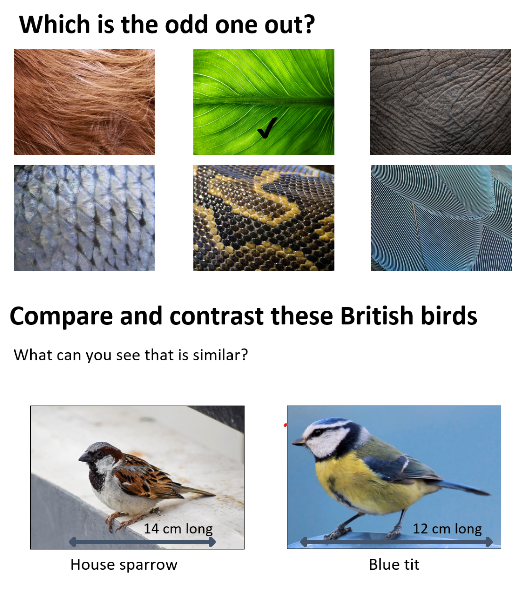
    Challenge and Stretch in Science: Animals including humans

    The Challenge and Stretch materials for Years 1 to 6, focusing on Animals including humans, have been designed to support you in enhancing the Key Stage 1 and 2 curricula already being delivered, by developing the accurate use of scientific vocabulary whilst increasing science capital, encouraging pupils to see that science is for them and relevant to their lives.

    These materials are part of the PiXL Challenge and Stretch project, which aims to support school leaders and teachers in ensuring that all pupils, including the most able, are given the opportunity to meet their potential, through CPD, resources and leadership guidance

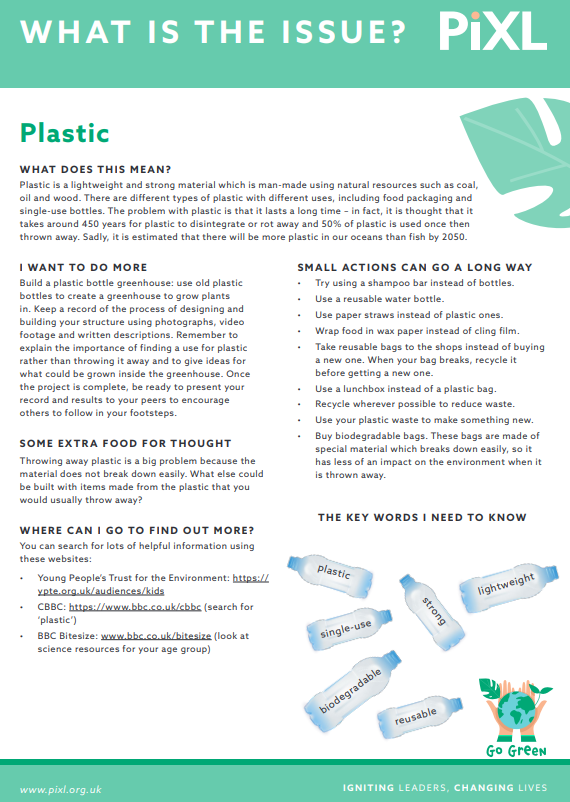
    Go Green Stimulus Sheets

    We know that climate change is a big concern for children and young people, with a survey of 1000 5–18-year-olds undertaken by the UCL in January 2022, finding that concern about the environment overshadowed a long list of other issues, including crime, gender and racial inequality and homelessness. It is crucial that pupils are equipped for the challenges and opportunities that climate change presents by supporting them to develop the appropriate knowledge, skills and understanding to help them to reduce climate anxiety and to be prepared to contribute to sustainability in their future careers. As the DfE states in their policy paper on Sustainability and climate change: a strategy for the education and children’s services systems (updated December 2023): Green jobs will not be niche. We anticipate that sustainability and climate change will touch every career.

    Our Go Green Stimulus Sheets provide an opportunity for pupils to explore some of the important issues relating to sustainability and climate change including litter, use of plastics and fossil fuels. Each sheet presents a summary of the issue, ways that children and young people can help, pertinent vocabulary to support them in discussing the issue and links to useful websites to help them to find out more.