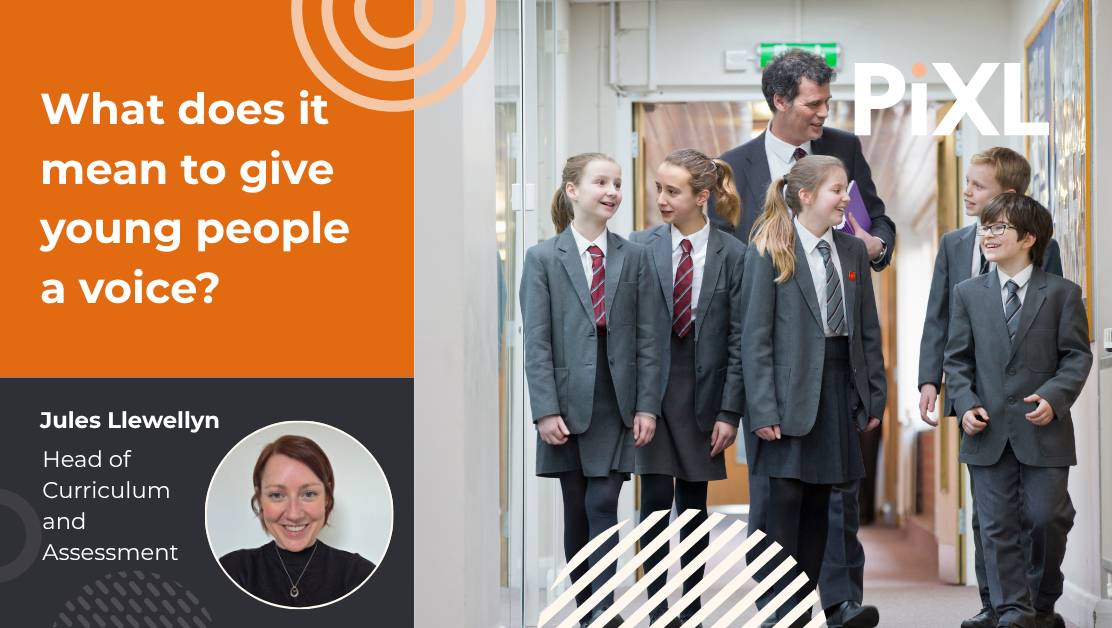
The UK ranks last out of 27 European countries for how happy 15-year-olds are with their life. Almost half of young people in England feel their voice doesn’t matter in decisions across the country.
Those two facts, sitting next to each other, are worth spending time on. These facts might not be surprising to anyone who works with young people, but they point at something specific. It’s not that young people are disengaged, many of them have just stopped expecting to matter.
That’s a different problem and it needs a different kind of response.
Agency isn’t the same as choice
It’s easy to conflate the two. Choice is about options, but Agency is about whether a young person believes those options are genuinely available to them.
Consider the student who knows, in theory, that there are different paths open after school.
Who has heard the assemblies, seen the posters, sat through the careers session. And who still makes decisions based primarily on what feels safest, or most familiar, or least likely to result in failure. It’s not that the options weren’t presented, just that nothing in their experience has taught them that their preferences carry weight. That what they want is a legitimate input into what happens next.
Agency is what changes that. It’s the difference between a young person who sees the future as something that will happen to them, and one who understands it as something they’re already shaping. And it’s built, or not built, in the smallest and most ordinary moments of school life: whether a student’s unconventional answer gets taken seriously or smoothed over. Whether the adults around them are genuinely curious about their thinking.
Whether anything they care about shows up anywhere in the rooms they’re in.
This matters across every phase. In primary, it shows up in whether children feel their opinions count for anything. In secondary and post-16, the decisions carry more visible consequences: subjects, pathways and identity. Young people who feel genuine agency in those moments tend to make choices that reflect who they actually are. Those who don’t make choices for very different reasons.
What schools are already doing
It would be a mistake to read any of this as a suggestion that schools are falling short. The work of building environments where young people feel they belong and that their presence in the room counts is happening in classrooms and corridors and tutor groups every single day. It’s in the way a teacher responds when a student gets something wrong. It’s in the conversations that happen at the edges of the school day, the ones that never make it into any data set.
What the research reflects is a broader picture that schools sit inside but didn’t create. Low life satisfaction among teenagers isn’t a school problem, it’s a social one. Schools are doing difficult and important work within it.
The more useful question isn’t whether schools are doing enough. It’s whether the things that are already working can be made more deliberate, and shared widely enough that more young people benefit from them.
The end of term matters more than it seems
There’s a particular window at the end of the summer term that doesn’t always get the attention it deserves.
For many young people, school is the most stable and connected part of their week. When
that disappears for six weeks, the students who were already uncertain about their place in the world can feel it acutely. The summer break is long. It’s largely unstructured. And it arrives at the point in the year when young people have the least adult scaffolding around them.
The final weeks of term are a genuine opportunity. This isn’t the time to fix things, but to equip. To help young people leave with a clearer sense of their options, a stronger belief that their voice matters, and something to hold onto when school isn’t there.
In September, PiXL’s Let’s Talk programme gives schools a structured way to pick these conversations back up from the start of the new year. For secondary members, Choices with Omar Sharif and Our Power to Change the World with Onjali Rauf give young people the chance to explore agency and decision-making through the lens of people who have navigated real complexity in their own lives. If the end of this term has surfaced things worth returning to, these are worth having on your radar for autumn.
In the final stretch of term, they are one way of making sure the summer break begins with young people feeling equipped rather than simply released.
The quieter students in every room
The schools that do this best tend to share one thing. They treat the question of student voice not as a programme or an initiative, but as an ongoing test of their own practice. They notice when the same students are quiet in every room. They pay attention to who’s not putting their hand up, not just who is. They understand that a young person’s belief in their own agency is built across thousands of small interactions, and that it can be undermined by the same.
The data on teenage life satisfaction in this country is a prompt to keep paying attention to that. The young people in front of us every day are navigating a world that gives them a lot of noise and very little signal about what they are actually worth.
Schools are often the clearest signal they get. For some young people, it’s the most reliable source of evidence they have about whether they matter. Schools carry that whether they intend to or not. The question is just how deliberately they use it.